
Alloy Steel Flanges are forged piping components engineered to provide reliable mechanical strength, dimensional integrity, and pressure-temperature performance in demanding industrial systems. They are manufactured from alloy steel grades containing controlled additions of elements such as chromium, molybdenum, nickel, and manganese to improve strength, hardenability, creep resistance, oxidation resistance, and performance at elevated temperatures.
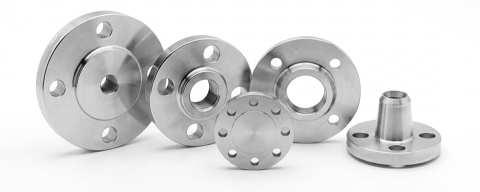
An Alloy Steel Flange is commonly used for connecting pipes, valves, pumps, pressure vessels, heat exchangers, and other process equipment where conventional carbon steel flanges may not provide the required temperature or mechanical performance.
For industrial procurement, an experienced Alloy Steel Flange Stockist in India can supply flanges in multiple grades, pressure classes, facing configurations, sizes, and dimensional standards for refinery, petrochemical, power generation, oil and gas, chemical processing, and engineering applications.
An Alloy Steel Flange is a forged or machined piping component used to create a bolted, gasketed, or welded connection between sections of an industrial piping system.
Unlike standard carbon steel flanges, alloy steel flanges contain specific alloying elements that enhance performance under demanding service conditions. Chromium and molybdenum are particularly important in many high-temperature grades because they contribute to oxidation resistance, elevated-temperature strength, and resistance to creep and graphitization.
The correct Alloy Steel Flange grade depends on the pipe material, operating temperature, pressure, process medium, welding requirements, and applicable piping code.
Get Factory Rates →Alloy Steel Flanges are selected for applications where mechanical and thermal performance are critical.
Alloy steel flanges are available in several ASTM/ASME forging grades. The most suitable grade should be selected according to the temperature, pressure, process environment, and piping material.
F11 is a chromium-molybdenum alloy steel commonly used in elevated-temperature service. It offers a combination of strength, thermal stability, and resistance to creep.
Typical applications include:
F22 is a chromium-molybdenum alloy steel grade used extensively in high-temperature and high-pressure applications. Its molybdenum content contributes to elevated-temperature strength, while chromium improves oxidation resistance.
F22 Alloy Steel Flanges are commonly specified for:
F5 is a chromium-molybdenum forging grade designed for elevated-temperature applications where improved oxidation resistance and mechanical strength are required.
It may be used in:
F9 contains chromium and molybdenum and is designed for demanding elevated-temperature service. It provides improved resistance to oxidation and useful mechanical strength at temperature.
Typical applications include:
Alloy steel grades containing chromium and molybdenum are designed to maintain useful strength at temperatures where ordinary carbon steel may become less suitable. This makes Alloy Steel Flanges appropriate for selected steam, refinery, and thermal-processing systems.
At sustained elevated temperatures, creep can become an important design consideration. Chromium-molybdenum alloy steels are widely used in applications where long-term resistance to deformation under stress is required.
Chromium contributes to the formation of protective oxide layers that can improve resistance to oxidation in appropriate high-temperature environments.
The combination of forged construction, material strength, and standardized pressure classes makes Alloy Steel Flanges suitable for demanding piping connections when correctly selected according to the applicable pressure-temperature rating.
Forging provides a dense and structurally consistent material form that is well suited to pressure-containing components. Proper heat treatment following forging is essential for achieving the specified mechanical properties.
Alloy Steel Flanges are available in several configurations depending on the piping design and installation method.
Weld Neck Flanges have a tapered hub that transitions into the pipe. They are widely used in high-pressure and high-temperature systems because the geometry provides good stress distribution and supports butt-welding.
Common applications include:
Slip-On Flanges fit over the pipe and are typically fillet welded around the hub and bore. They can be suitable for lower-stress piping applications where their design is permitted by the applicable engineering specification.
Blind Flanges are solid discs used to close piping ends, nozzles, valves, and equipment openings. They are particularly useful where a piping section may need to be isolated for maintenance or future expansion.
Socket Weld Flanges accept the pipe into a machined socket and are welded around the outside. They are commonly used on smaller-diameter, higher-pressure piping systems.
Threaded Flanges connect to threaded pipe without welding. They may be used in applications where welding is undesirable or impractical, subject to pressure, temperature, and code limitations.
Lap Joint Flanges are used with matching stub ends and can simplify installation and maintenance in suitable piping systems. The flange itself does not form the primary pressure boundary in the same manner as a weld neck flange.
The flange facing affects gasket selection, sealing performance, and connection design.
Common facing configurations include:
Raised Face is one of the most common industrial flange configurations. The raised sealing surface provides a defined area for gasket compression.
RTJ flanges use a machined groove and metallic ring gasket. They are frequently selected for high-pressure and high-temperature services where the applicable piping specification calls for this connection type.
Flat Face flanges have a completely flat sealing surface and are used in applications where the mating equipment and gasket arrangement require this configuration.
Industrial Alloy Steel Flanges are manufactured according to recognized international standards to control dimensions, materials, pressure ratings, testing, and manufacturing requirements.
| Standard | Application |
|---|---|
| ASTM A182 / ASME SA182 | Forged alloy and stainless steel flanges and fittings |
| ASME B16.5 | Pipe flanges and flanged fittings, NPS 1/2 through NPS 24 |
| ASME B16.47 | Large-diameter steel flanges |
| ASME B16.48 | Line blanks |
| ASME B16.11 | Forged socket-weld and threaded fittings |
| MSS SP-44 | Steel pipeline flanges |
| EN 1092-1 | Flanges and their joint dimensions |
| DIN Standards | Applicable European/German dimensional requirements |
The exact standard should be confirmed before manufacturing because dimensions, pressure classes, facing dimensions, tolerances, and material requirements can differ.
Alloy Steel Flanges are available in different pressure classes according to the applicable standard.
Common ASME B16.5 pressure classes include:
Pressure class does not represent a single universal pressure value. The permissible pressure depends on material group, operating temperature, flange design, standard, and applicable pressure-temperature tables.
For this reason, an Alloy Steel Flange should always be selected using the appropriate pressure-temperature rating rather than choosing a class based solely on nominal pressure.
Manufacturing quality has a direct effect on flange performance.
Approved alloy steel is produced with controlled chemical composition. Heat identification is maintained for material traceability.
The material is heated and forged to produce the required flange geometry. Controlled forging helps develop a suitable grain structure for pressure-containing service.
Chromium-molybdenum alloy steel grades generally require specified heat-treatment conditions. Normalizing, tempering, annealing, or other specified treatments may be used depending on the grade and material specification.
After forging and heat treatment, the flange is machined to achieve the required bore, outside diameter, bolt holes, hub dimensions, and facing configuration.
The finished flange is inspected for dimensions, surface condition, material identity, mechanical properties, and other requirements defined by the purchase specification.
Heat treatment is an important part of alloy steel flange manufacturing.
For chromium-molybdenum grades, controlled heat treatment helps establish the required combination of:
Improper heat treatment can negatively affect mechanical properties and weldability. Therefore, heat-treatment records should be maintained as part of the material traceability documentation.
Alloy steel flanges are used in selected high-temperature and high-pressure piping systems, processing equipment, and transmission-related applications where the selected alloy grade satisfies the project requirements.
Refineries operate with high temperatures, pressures, and chemically demanding process streams. Chromium-molybdenum flanges are commonly specified in appropriate high-temperature services.
Applications can include:
Power plants use alloy steel materials extensively in steam and high-temperature systems.
Typical applications include:
Petrochemical facilities require materials capable of operating under elevated temperatures and pressures. Alloy Steel Flanges can be used for compatible process systems and equipment connections.
Selected alloy steel grades can be used in chemical processing equipment where elevated-temperature mechanical performance is more important than resistance to aggressive aqueous corrosion.
Fabricators use Alloy Steel Flanges in pressure piping, heat exchangers, vessels, skids, process equipment, and specialized industrial assemblies.
Alloy Steel Flanges are suitable for a broad range of industrial applications where the selected material grade meets the operating requirements.
Quality assurance is particularly important for pressure-containing flange components.
Inspection requirements should be established before production so that the manufacturer can maintain appropriate records and traceability.
A professional Alloy Steel Flange Supplier in India should be able to provide appropriate material and inspection documentation according to the purchase order.
Documentation requirements can vary significantly between domestic and international engineering projects.
View Certificate →An established Alloy Steel Flange Stockist in India can support industrial buyers who require readily available flange sizes and grades for maintenance, replacement, fabrication, or project requirements.
Stock availability may include:
A stockist should provide clear information regarding material grade, dimensions, pressure class, facing, heat number, and certification before dispatch.
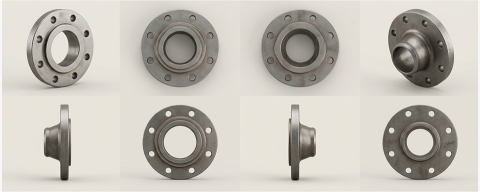
The choice between alloy steel and carbon steel should be based on actual service requirements.
| Feature | Alloy Steel Flange | Carbon Steel Flange |
|---|---|---|
| High-temperature performance | Generally superior for suitable grades | More limited |
| Creep resistance | Better in suitable Cr-Mo grades | Generally lower |
| Alloying elements | Cr, Mo and other controlled additions | Primarily iron-carbon with lower alloy content |
| Oxidation resistance | Improved in suitable grades | Lower |
| Cost | Generally higher | Generally lower |
| Typical use | High-temperature/high-pressure systems | General industrial piping |
| Welding requirements | Often more controlled | Generally simpler |
An Alloy Steel Flange should not automatically replace carbon steel. Material selection should be based on design temperature, pressure, corrosion mechanism, code requirements, and lifecycle considerations.
| Parameter | Details |
|---|---|
| Product | Alloy Steel Flange |
| Material Type | Alloy Steel |
| Common Grades | ASTM A182 F5, F9, F11, F22 |
| Manufacturing | Forged / Machined |
| Common Standard | ASTM A182 / ASME SA182 |
| Flange Dimension Standard | ASME B16.5 |
| Large-Diameter Standard | ASME B16.47 |
| Pressure Classes | 150, 300, 600, 900, 1500, 2500 |
| Common Facings | RF, FF, RTJ |
| Types | Weld Neck, Blind, Slip-On, Socket Weld, Threaded, Lap Joint |
| Main Advantages | Strength, elevated-temperature performance, creep resistance |
| Major Industries | Oil & Gas, Refinery, Petrochemical, Power, Chemical |
| Documentation | MTC, heat treatment, inspection and testing records |
For an accurate quotation, provide the alloy steel grade, flange type, nominal size, pressure class, facing, bore or pipe schedule, quantity, applicable standard, inspection requirements, certification requirements, and delivery location.
An experienced Alloy Steel Flange Stockist in India can help with standard and project-specific requirements, while a qualified Alloy Steel Flange Supplier in India can coordinate manufacturing, inspection, certification, packaging, and delivery for larger industrial projects.
The right Alloy Steel Flange should always be selected according to the complete engineering specification rather than grade, size, or pressure class alone. Proper material selection, dimensional compliance, heat treatment, traceability, and inspection are essential for dependable performance in high-pressure and elevated-temperature piping systems.
Share your specification and get factory rates within 2 business hours.
Call +91 (22) 6749-8888