Carbon steel pipes and tubes are among the most widely used products in industrial piping, structural engineering, pressure systems, boilers, and fluid transportation. As a reliable Carbon steel pipes and tubes Stockist in India and Carbon steel pipes and tubes Supplier in India, we supply seamless and welded carbon steel products in different grades, sizes, wall thicknesses, schedules, and specifications.
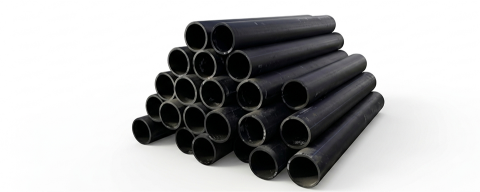
Carbon steel pipes and tubes offer a practical combination of mechanical strength, weldability, machinability, and cost efficiency. By controlling the carbon and manganese content and using suitable manufacturing and heat-treatment processes, these products can be tailored for low-temperature, high-pressure, boiler, structural, and general engineering applications.
Get Factory Rates →As an experienced Carbon steel pipes and tubes Supplier in India, we supply a broad range of products for different industrial applications.
Our product range includes:
Seamless carbon steel pipes are manufactured without a longitudinal weld and are commonly used for pressure-containing applications. They are produced through processes such as piercing, hot rolling, cold drawing, and heat treatment.
These pipes are suitable for applications involving:
Carbon steel welded pipes are manufactured by forming steel strip or plate into a tubular shape and joining the edges through a controlled welding process. Common welded pipe types include ERW and EFW products. They are widely used for fluid transportation, structural applications, water pipelines, and general industrial service.
ASTM A106 Grade B is a widely used seamless carbon steel pipe specification for high-temperature service. The grade provides a balance of strength, ductility, and weldability.
Key characteristics include:
ASTM A106 Grade B pipes are widely used in refineries, power plants, process industries, and steam piping systems.
ASTM A106 Grade C generally provides higher strength than Grade B due to its higher allowable carbon and manganese content.
Key characteristics include:
Grade C may be selected when increased mechanical strength is required while maintaining the characteristics of a carbon steel pressure pipe.
ASTM A53 Grade B covers seamless and welded black and hot-dipped galvanized steel pipes intended for mechanical and pressure applications.
Key characteristics include:
ASTM A53 Grade B is commonly used in building services, structural systems, process piping, and general fluid transportation.
API 5L Grade B is commonly used for pipeline transportation systems in the oil and gas industry. It is designed for conveying petroleum, natural gas, water, and other fluids.
Key characteristics include:
The required PSL level, dimensions, testing requirements, and supplementary requirements should be specified according to the project.
ASTM A333 Grade 6 is a carbon steel pipe grade intended for low-temperature service. It is designed to provide suitable impact toughness at specified low temperatures.
Key characteristics include:
ASTM A333 Grade 6 pipes are commonly used in refrigeration, LNG-related facilities, low-temperature process systems, and industrial piping.
ASTM A179 covers seamless cold-drawn low-carbon steel tubes intended for tubular heat exchangers, condensers, and similar heat-transfer equipment.
Key characteristics include:
ASTM A179 tubes are commonly used in condensers, heat exchangers, and industrial cooling systems.
ASTM A192 covers seamless carbon steel boiler tubes intended for high-pressure service.
Key characteristics include:
These tubes are commonly used in boilers and high-pressure steam-generating equipment.
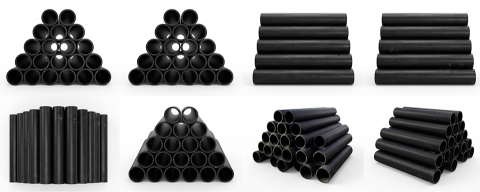
As a professional Carbon steel pipes and tubes Stockist in India, we supply products according to recognized international specifications and customer requirements.
Common standards include:
The correct specification depends on whether the product is intended for pressure piping, low-temperature service, boilers, heat exchangers, structural applications, or fluid transportation.
Carbon steel primarily consists of iron and carbon, with controlled amounts of other elements that influence strength, ductility, weldability, and hardenability.
| Element | Primary Function |
|---|---|
| Carbon | Increases strength and hardness |
| Manganese | Improves strength and hardenability |
| Silicon | Acts as a deoxidizer and contributes to strength |
| Phosphorus | Controlled to maintain toughness |
| Sulfur | Controlled to support ductility and weldability |
| Iron | Primary base element |
The exact chemical composition varies according to the grade and applicable ASTM, API, or other material specification.
The mechanical properties of carbon steel pipes and tubes depend on the material grade, manufacturing process, wall thickness, and heat treatment.
Important properties include:
ASTM A106 Grade B is commonly used for high-temperature pressure piping, while ASTM A333 Grade 6 is selected when low-temperature toughness is required. API 5L grades are widely used for pipeline transportation applications.
Seamless pipes are generally manufactured by:
Seamless products are often selected for high-pressure and elevated-temperature service.
Welded carbon steel pipes are manufactured by:
The appropriate welded manufacturing process is selected according to the required diameter, wall thickness, specification, and application.
Carbon steel pipes generally offer good weldability, particularly low- and medium-carbon grades. However, welding procedures should consider the material grade, wall thickness, carbon equivalent, and service requirements.
Important considerations include:
Proper fabrication procedures help maintain mechanical integrity and reduce the risk of weld defects.
Standard carbon steel does not provide the same inherent corrosion resistance as stainless steel or nickel-based alloys. Its suitability in corrosive environments depends on the service medium and the use of protective systems.
Common protection methods include:
The coating system should be selected according to the operating environment, fluid composition, temperature, and expected service life.
Carbon steel is often selected where strength, availability, and cost efficiency are the primary requirements, while stainless steel is preferred when corrosion resistance and hygiene are critical.
| Property | Carbon Steel Pipes and Tubes | Stainless Steel Pipes and Tubes |
|---|---|---|
| Mechanical Strength | High | High, depending on grade |
| General Corrosion Resistance | Limited without protection | Excellent, depending on grade |
| Cost | Generally more economical | Generally higher |
| Weldability | Generally good | Grade-dependent |
| High-Temperature Service | Suitable for selected grades | Suitable for selected grades |
| Common Applications | Pipelines, boilers, structures | Chemical, marine, food and process industries |
Carbon steel pipes and tubes are used across a wide range of industries. Different grades should be selected according to pressure, temperature, mechanical loading, corrosion conditions, and applicable design codes.
Major applications include:
As a dependable Carbon steel pipes and tubes Supplier in India, products can be supplied with inspection and testing according to applicable standards and project requirements.
Available testing may include:
Material Test Certificates and additional inspection documents can be provided according to customer requirements.
View Certificate →As an experienced Carbon steel pipes and tubes Stockist in India, we supply products for industrial, pressure, structural, pipeline, boiler, and low-temperature applications.
Our supply capabilities include:
As a reliable Carbon steel pipes and tubes Stockist in India and Carbon steel pipes and tubes Supplier in India, we supply high-quality seamless and welded carbon steel products for oil and gas, power generation, petrochemical processing, boilers, heat exchangers, construction, and industrial piping systems.
Our range includes ASTM A106, ASTM A53, API 5L, ASTM A333, ASTM A179, and ASTM A192 products in different sizes, schedules, wall thicknesses, and specifications. Each product can be supplied with the required material certification, testing documentation, and traceability to support project quality requirements.
For an accurate quotation, provide the required grade, pipe or tube type, outside diameter, wall thickness or schedule, length, applicable standard, quantity, testing requirements, coating requirements, and documentation requirements.
Share your specification and get factory rates within 2 business hours.
Call +91 9167785999